The Circular Economy
Seeing possibility where others see waste.
Some people see a yogurt container. Others see a cutting board. Some see a wine bottle. Others see the foundation for a highway. Some see a banana peel. Others see tomorrow’s garden.
At first glance, these stories seem unrelated. They involve different people, different businesses and different industries, but they all begin with the same simple question:
What else could this become?
That question sits at the heart of the circular economy. While the term may be relatively new, the mindset isn’t. In the Cariboo, resourcefulness has always been part of the way people live and work. For generations, people have repaired instead of replaced, adapted instead of abandoned, and found value in what others overlooked. It wasn’t called innovation. It was simply common sense.
Today, that same way of thinking is creating new opportunities across the region.
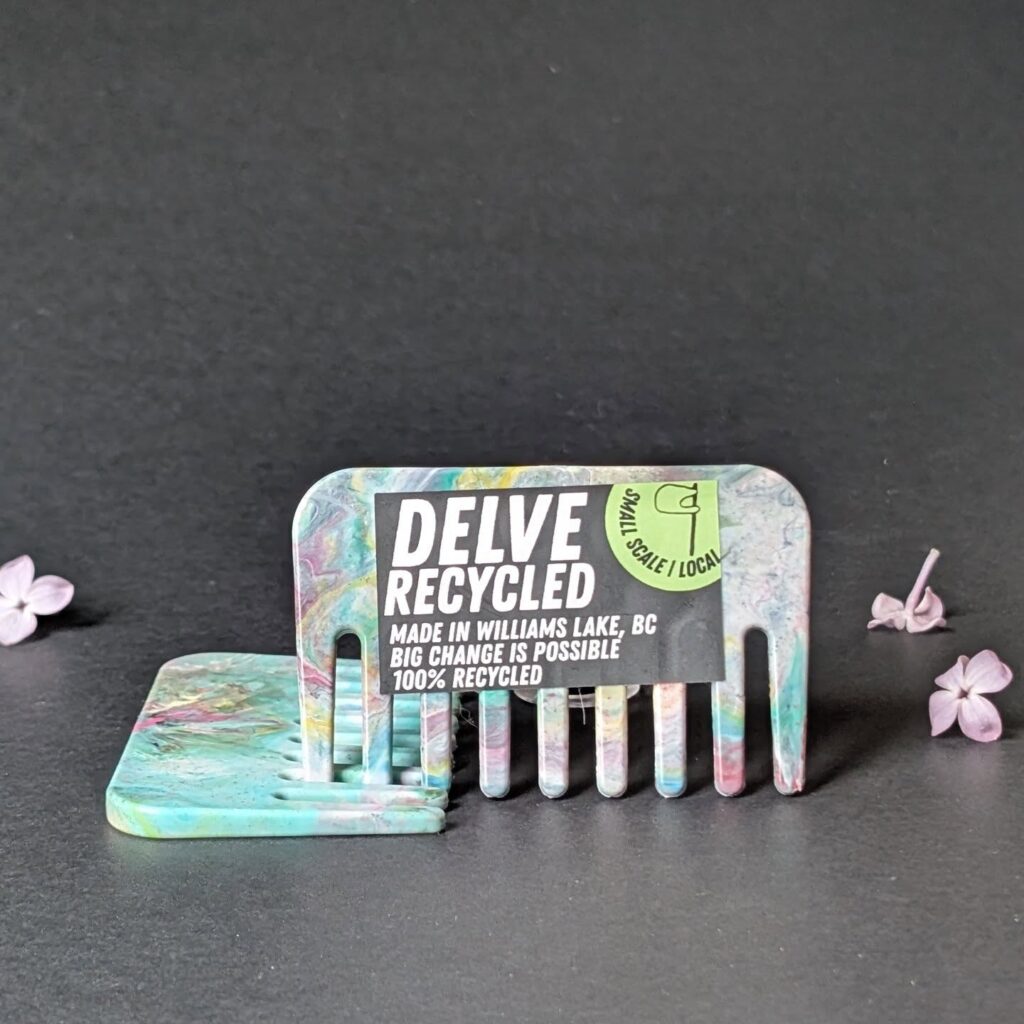
Emma Swabey sees possibility in discarded plastic. Through her Williams Lake business, Delve, everyday items like milk jugs, yogurt containers and industrial plastics become functional products, educational workshops and hands-on experiences that help communities rethink their relationship with waste. Her work is as much about inspiring people to see materials differently as it is about recycling them.
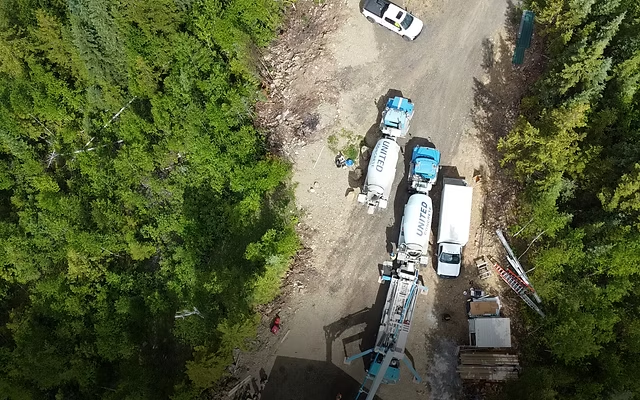
A few hours north, United Concrete applies that same thinking on an industrial scale. Glass that once had few options beyond the recycling bin is cleaned, processed and transformed into innovative products, including industrial abrasives and Enviro-Rock, a lightweight foam glass aggregate now used in infrastructure projects across Canada. What others saw as the end of a product’s life became the beginning of an entirely new manufacturing opportunity.
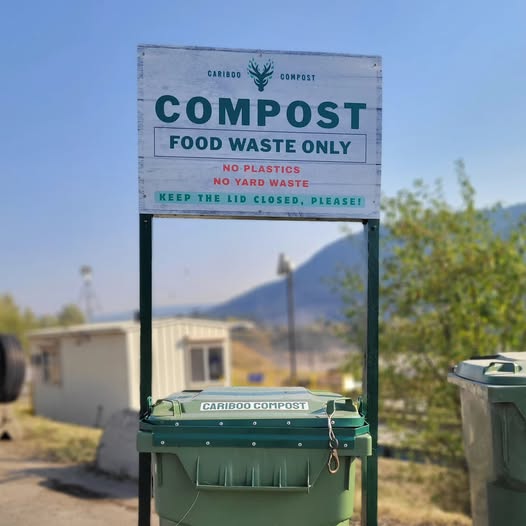
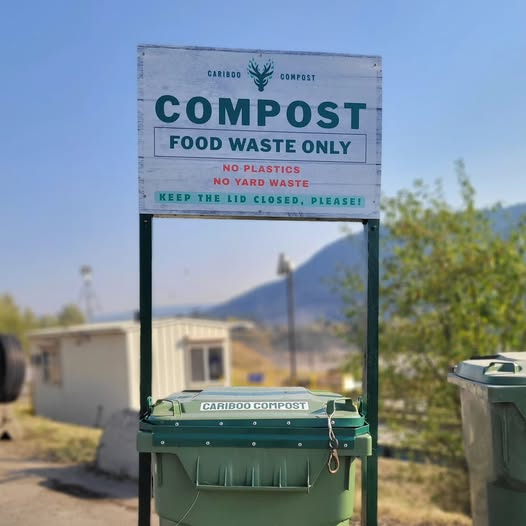
Oliver Berger approaches the same challenge from another direction. Through Cariboo Compost, food scraps collected from homes, restaurants and businesses are diverted from the landfill and transformed into nutrient-rich compost that helps grow food locally. As Oliver likes to say, “I can take your Guatemalan banana peel and turn it into something bigger and better—soil to grow vegetables locally, right here in our community.”
Although their businesses are very different, they share the same way of thinking. They look beyond the end of a product’s life and imagine what comes next. Whether it’s plastic, glass or organic waste, the material itself is almost beside the point. What matters is the willingness to see possibility where others see an ending.
Perhaps that’s why the circular economy feels so natural in the Cariboo.
This has always been a region where people solve problems with creativity and practicality. Manufacturers invest in new technology. Entrepreneurs build businesses around good ideas. Communities come together to find local solutions to local challenges. The circular economy is simply another expression of that character.
It is also creating something much bigger than better recycling.
It is encouraging new manufacturing, supporting local entrepreneurship, creating educational opportunities and keeping valuable resources working longer. It is proof that environmental responsibility and economic opportunity can grow together, strengthening communities while creating businesses that are built to last.
Innovation doesn’t always come from high-rise offices or billion-dollar research labs. Sometimes it starts with a family-owned manufacturer willing to look at recycled glass differently. Sometimes it begins with a toaster oven in a basement workshop. Sometimes it starts with a compost bin behind a restaurant.
The common thread isn’t the material.
It’s the people willing to ask one more question before something is thrown away.
What else could this become?
In the Cariboo, that simple question is helping create new industries, stronger communities and opportunities that continue to grow.
Cariboo. It’s true.